Reading the Blockchain Like a Pro: How to Spot Whale Betting Moves Before They Shape the Market
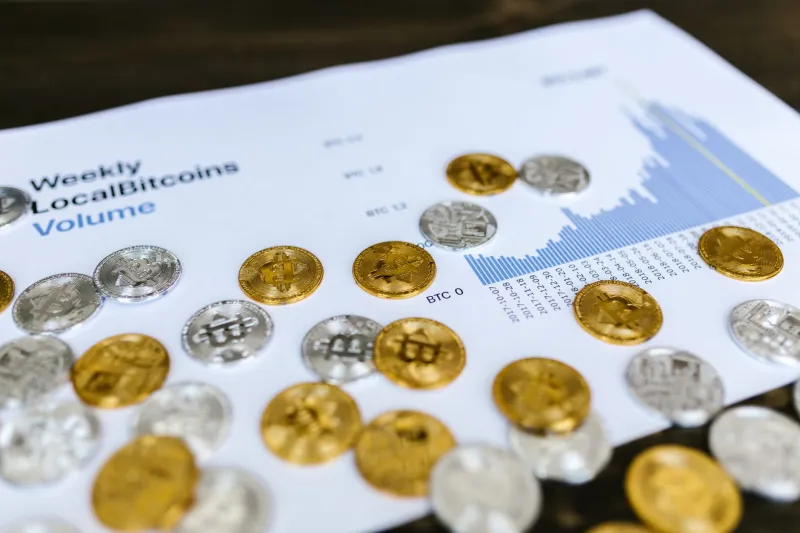
There's a reason serious traders obsess over whale wallets. When someone moves millions of dollars worth of crypto into a specific position, they usually know something — or at least, they think they do. On a traditional betting site, you'd never get a peek at how the biggest players are moving their money. But on a decentralized platform like ChainBet5? Every transaction is sitting right there on a public ledger, waiting to be read.
That's not just a philosophical advantage. It's a genuinely practical edge for anyone willing to do a little homework.
What Exactly Is a "Whale" in the Crypto Betting World?
In crypto circles, a whale is any wallet holding a disproportionately large amount of assets relative to the broader market. In the context of decentralized betting, that definition extends to wallets placing unusually large wagers on specific outcomes — whether that's a sports event, a prediction market, or a token price movement.
These aren't your average weekend gamblers. Whale bettors often have access to sophisticated research, insider-adjacent information (within legal limits), or simply enough capital to move market sentiment on their own. When a whale drops a massive bet on a particular outcome, other participants notice — and the odds or token prices tend to shift accordingly.
For retail bettors on ChainBet5, tracking these movements isn't about copying blindly. It's about understanding the why behind large on-chain flows and making more informed decisions as a result.
The Tools That Make On-Chain Analysis Accessible
You don't need to be a data scientist to start reading blockchain activity. A handful of free and freemium tools have made on-chain analytics genuinely accessible to everyday users.
Dune Analytics is one of the most popular starting points. It lets users run custom SQL queries against blockchain data and visualize transaction patterns across major networks like Ethereum and Polygon. Community-built dashboards specifically tracking decentralized betting protocols are already out there — you just need to know where to find them.
Nansen takes things a step further by labeling known wallets, so instead of staring at anonymous hex addresses, you're looking at tags like "Smart Money" or "Exchange Whale." When labeled whales start concentrating bets in a particular direction on a prediction market, that signal is hard to ignore.
Arkham Intelligence is newer but quickly gaining traction. Its entity mapping technology connects wallet addresses to real-world identities where possible, giving you an even clearer picture of who's moving money and where.
For ChainBet5 users specifically, pairing these tools with the platform's own transparent transaction history creates a layered view of activity that no centralized sportsbook could ever offer.
Case Study: Prediction Markets and the Pre-Election Rush
Let's look at a real-world example of how on-chain betting patterns have historically telegraphed broader market sentiment.
During the lead-up to major U.S. elections, decentralized prediction markets like Polymarket have seen enormous spikes in whale activity. In several documented cases, large wallets began accumulating positions on specific political outcomes weeks before mainstream polling reflected the same probability shifts. Retail bettors who were watching on-chain flows — rather than relying solely on traditional news sources — had an early window to act.
This isn't market manipulation. It's information asymmetry working in the blockchain's favor. Because every bet is publicly recorded, the crowd's collective intelligence gets surfaced in real time. Whales who move early create a visible trail, and that trail has value.
The same dynamic plays out in crypto price prediction markets. When a cluster of high-value wallets starts betting heavily on a particular token's price movement, it often precedes broader market momentum in that direction. Correlation isn't causation, but the pattern has been consistent enough that serious on-chain analysts treat it as a meaningful signal.
Practical Steps for the Retail Bettor
So how do you actually put this into practice without spending 10 hours a day staring at wallet data? Here's a straightforward starting framework:
Set up wallet alerts. Tools like Nansen and Arkham let you flag specific wallets and receive notifications when they become active. Pick a handful of wallets that have historically been ahead of the curve on ChainBet5's active markets and watch their behavior.
Track bet concentration. On any given market, look at how total wagered value is distributed across wallet sizes. A market where 80% of the volume is concentrated in three or four wallets is telling a different story than one with broad participation. Concentrated whale bets often signal higher-conviction positions.
Watch for unusual timing. Whales rarely bet randomly. Large positions placed shortly before a scheduled announcement — an economic report, a major sports event, a token unlock — can suggest the bettor has a strong conviction about the outcome. Timing context matters.
Cross-reference with off-chain signals. On-chain data is powerful, but it's most useful when combined with traditional research. If whale wallets are piling into a specific bet and you're seeing corroborating signals in news flow or social sentiment, that convergence is worth paying attention to.
Why Transparency Is ChainBet5's Biggest Feature
This whole approach only works because of one thing: the blockchain's fundamental transparency. On a centralized platform, you're betting blind. You have no idea how other players are positioning, no way to verify that odds are being set fairly, and no public record of how the house is managing its exposure.
ChainBet5 operates in a fundamentally different environment. Every wager, every payout, every wallet interaction is recorded on-chain and verifiable by anyone. That's not just a trust mechanism — it's a rich data source that sophisticated bettors can mine for genuine insight.
For U.S. users who've grown up in a world where the house always has the information edge, this is a real paradigm shift. The playing field isn't perfectly level — whales still have capital advantages — but the information advantage is now available to anyone willing to learn how to read it.
Getting Started Without Getting Overwhelmed
If you're new to on-chain analytics, don't try to boil the ocean on day one. Start by exploring one tool — Dune Analytics is free and has a solid community of pre-built dashboards. Spend a few sessions just observing transaction patterns on markets you already understand. Over time, you'll start developing an intuition for what "normal" activity looks like versus what stands out.
The goal isn't to become a full-time blockchain analyst. It's to add one more layer of signal to your decision-making process — one that traditional bettors simply don't have access to.
On ChainBet5, the ledger is open. The question is whether you're reading it.